Eucalyptus Tereticorns Forest red gum
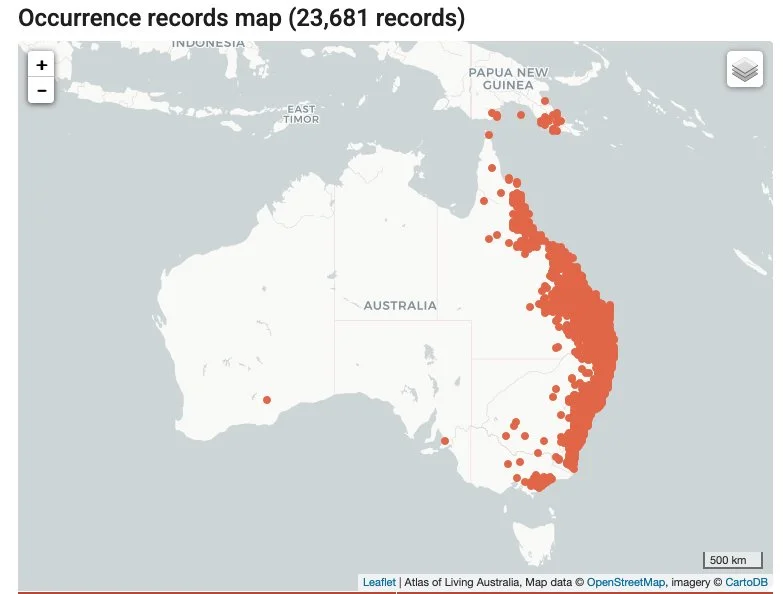
E. tereticornis is a tree that grows to a height of 20–50 m and forms a lignotuber (click here to find out what a lignotuberm is). Its common names include forest red gum, blue gum or red irongum. It is native to the east coast of Australia, with a widespread distribution from southern eastern Australia to the very north and into southern Papua New Guinea (see map below). It is the dominant species of dry sclerophyll forests and woodlands, usually on heavier soils.
It can flower any time of the year producing white flowers.
The bark sheds in irregular sheets, leaving a smooth trunk that is coloured in patches of white, grey and blue, depending on the time of year the bark is shed.
It is used for construction and in in heavy engineering, and has been used extensively for railway sleepers. Its leaves are used in the production of eucalyptus oil (cineole).
It was first was first formally described 1795 by James Edward Smith.
Its name - tereticornis – is derived from the Latin ‘teres’ which has a translation of “horn”, which refers to the horn-like cap on the flower buds.
The tree was planted in the Park in 1987.
Sources
PlantNET - https://plantnet.rbgsyd.nsw.gov.au/cgi-bin/NSWfl.pl?page=nswfl&lvl=sp&name=Eucalyptus~tereticornis
Atlas of Living Australia - https://bie.ala.org.au/species/https://id.biodiversity.org.au/taxon/apni/51440747
Australian Native Plants Society - https://resources.austplants.com.au/plant/eucalyptus-tereticornis/
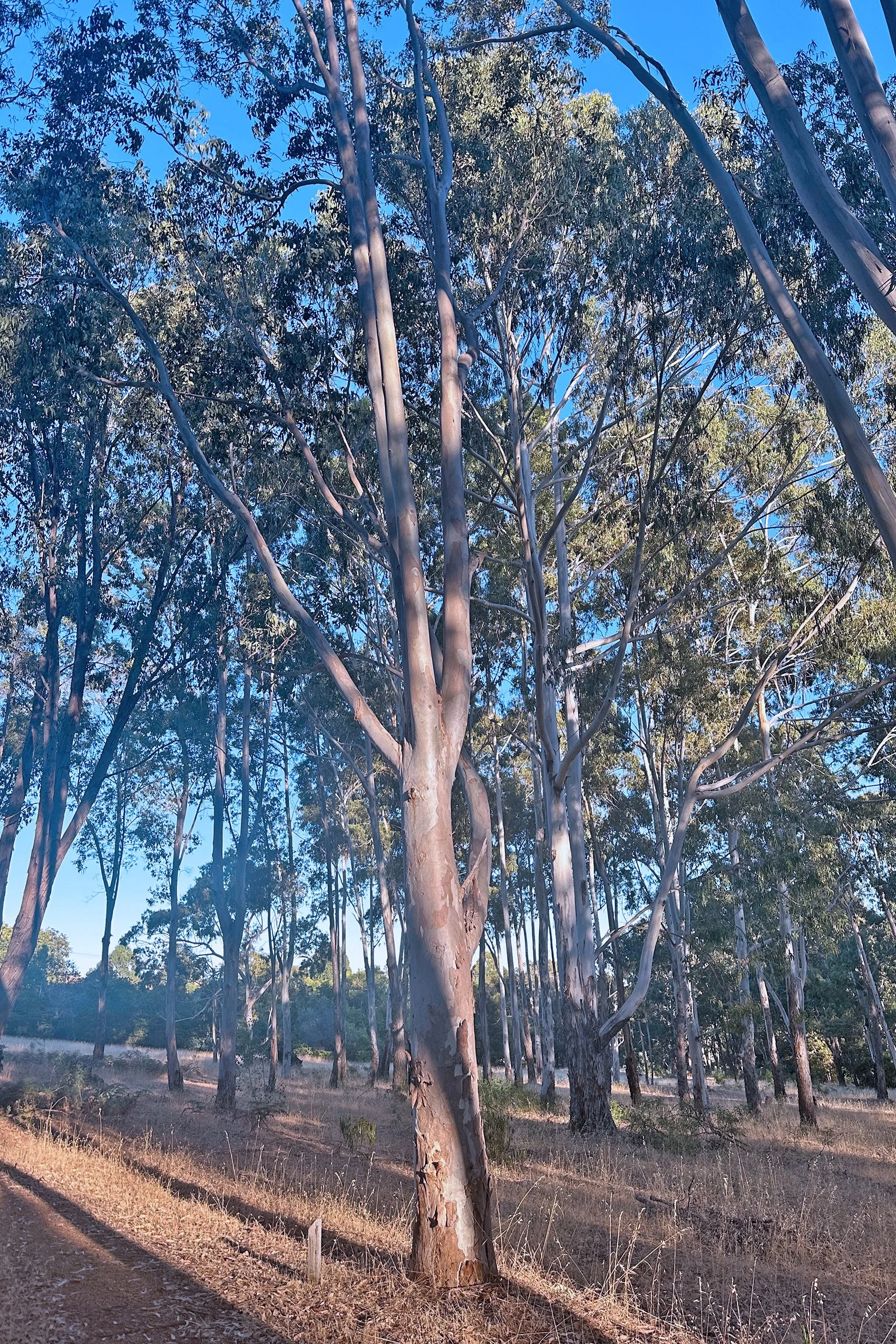
E. Tereticorns in the Park
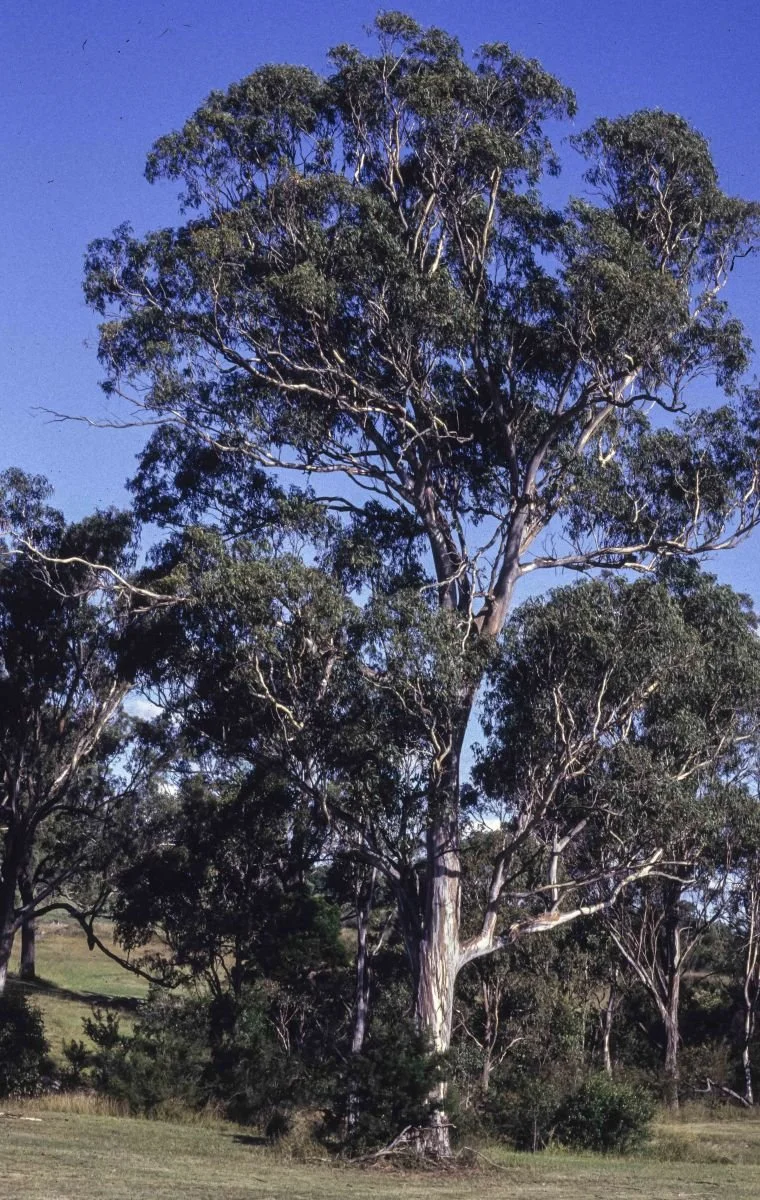
E. Tereticorns in it natural habitat - source: https://resources.austplants.com.au/plant/eucalyptus-tereticornis/