Eucalyptus Sieberi Silvertop ash
E. Sieberi is a tree up to 45m tall and doesn’t form a lignotuber (click here to find out what a lignotuber is). The bark is typically rough on trunk and base of large branches, flaky and orange-brown in colour, becoming more compact and turns dark grey to black as trees matures. Any smooth bark can be powdery, white to cream or yellow in colour.
It occurs as dry sclerophyll forests - typically made up of eucalypts, wattles and banksias usually on soil with low fertility.
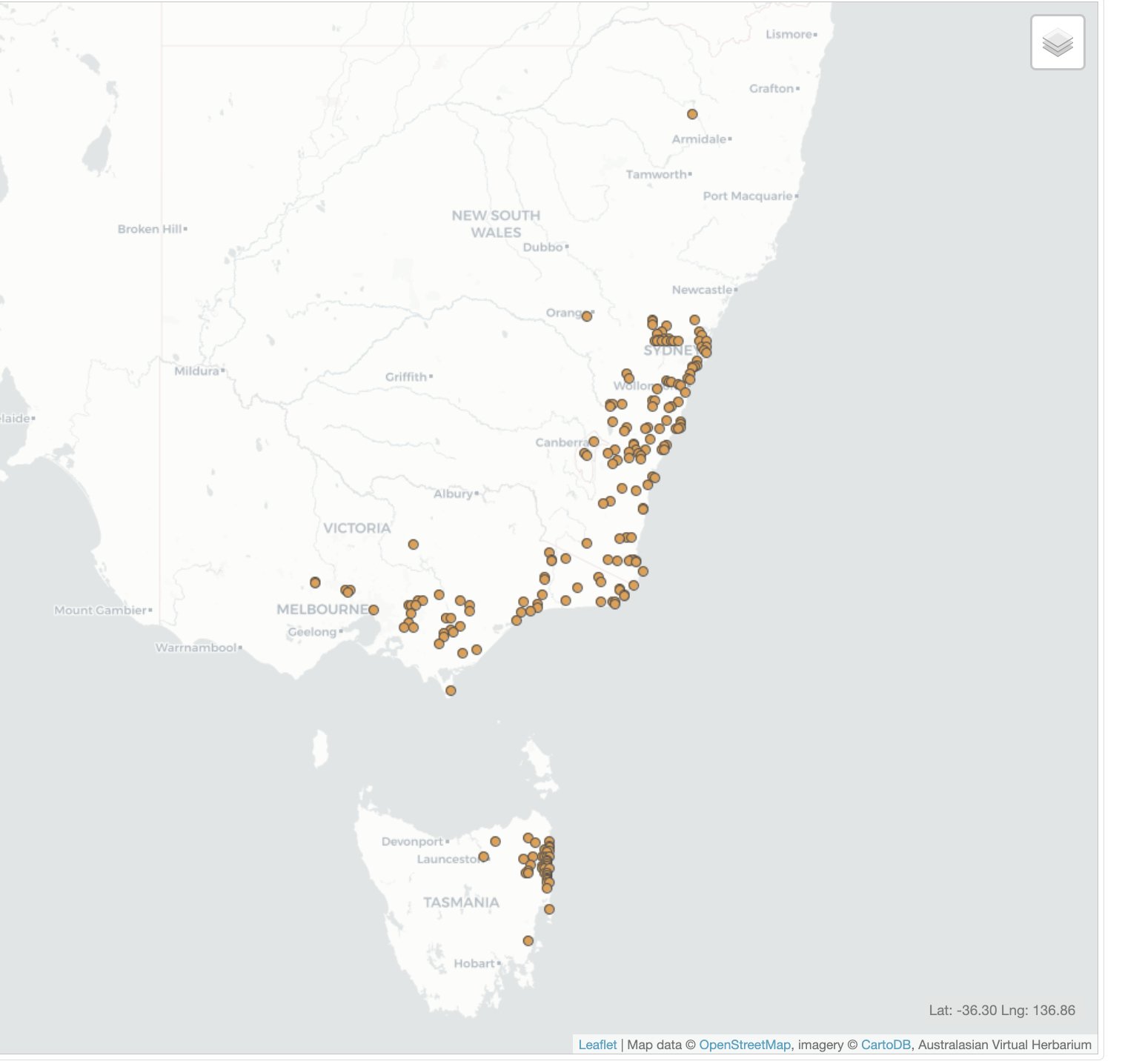
It has a widespread natural occurrence in south east Australia in NSW, Victoria and north east Tasmania (see map below). It prefers sandy and gravelly soils low in nutrients. These areas and not suitable for agriculture and so large tracts of these forests remain uncleared.
Flowers are white with flowering typically from September to January.
It is a popular commercial hardwood used for woodchips in New South Wales as well as for structural engineering, fencing, sleepers, flooring and plywood.
Common names include - Silvertop Ash, Silvertop, Ironbark, Tasmanian Ironbark, Coast Ash, Black Ash.
Named after Franz Wilhelm Sieber (1789–1844). He was a Czechoslovakian botanist who visited and studied in New South Wales for seven months during 1823.
The tree was planted in the Park in 1987.
Sources
PlantNET - https://plantnet.rbgsyd.nsw.gov.au/cgi-bin/NSWfl.pl?page=nswfl&lvl=sp&name=Eucalyptus~sieberi
Atlas of Living Australia: https://profiles.ala.org.au/opus/foa/profile/Eucalyptus%20sieberi
VICFLORA Flora of Victoria: https://vicflora.rbg.vic.gov.au/flora/taxon/144b6b18-3e6f-4acf-9a4d-2f3d4f4f48f3
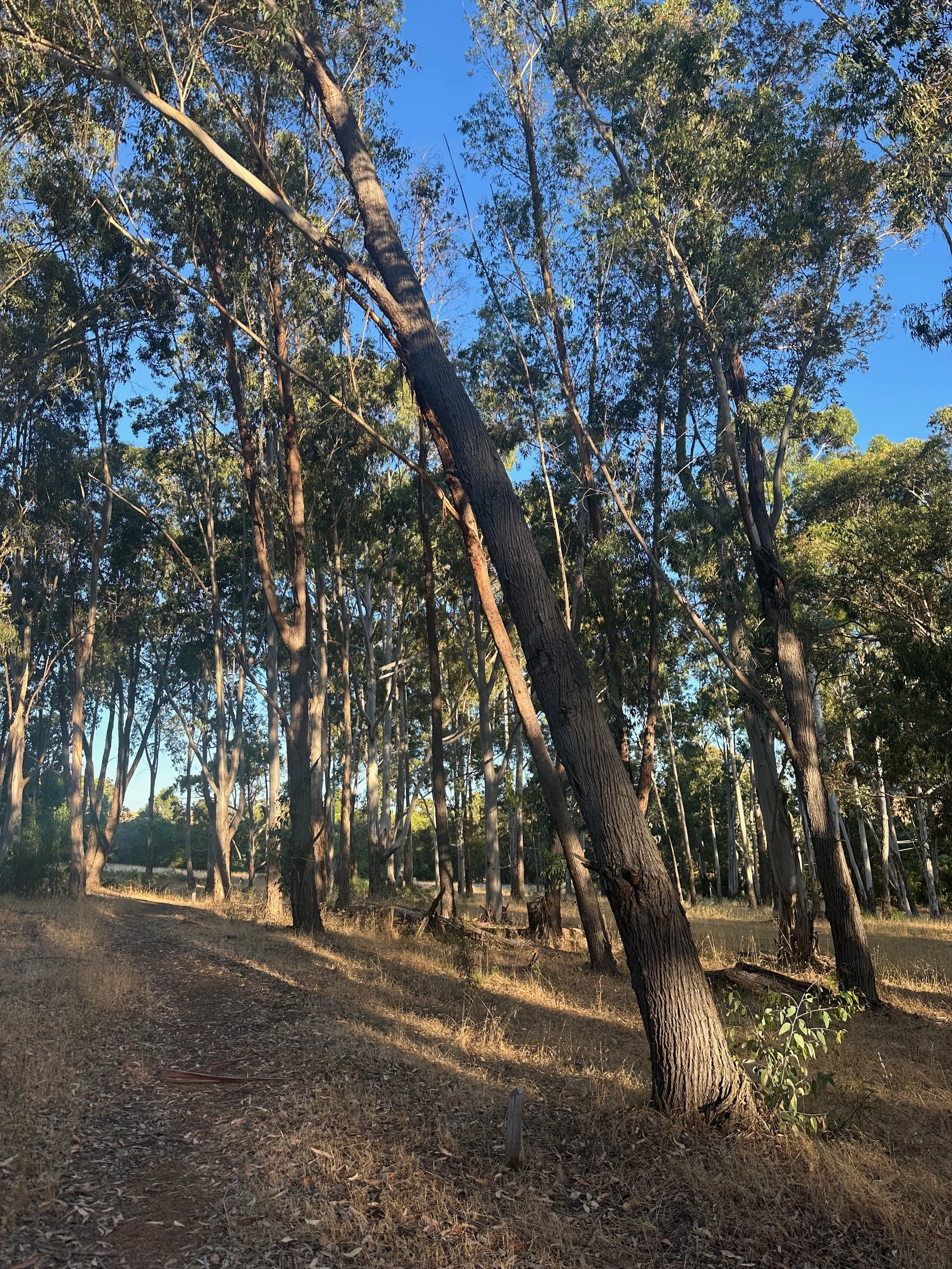
Eucalyptus Sieberi in the Park
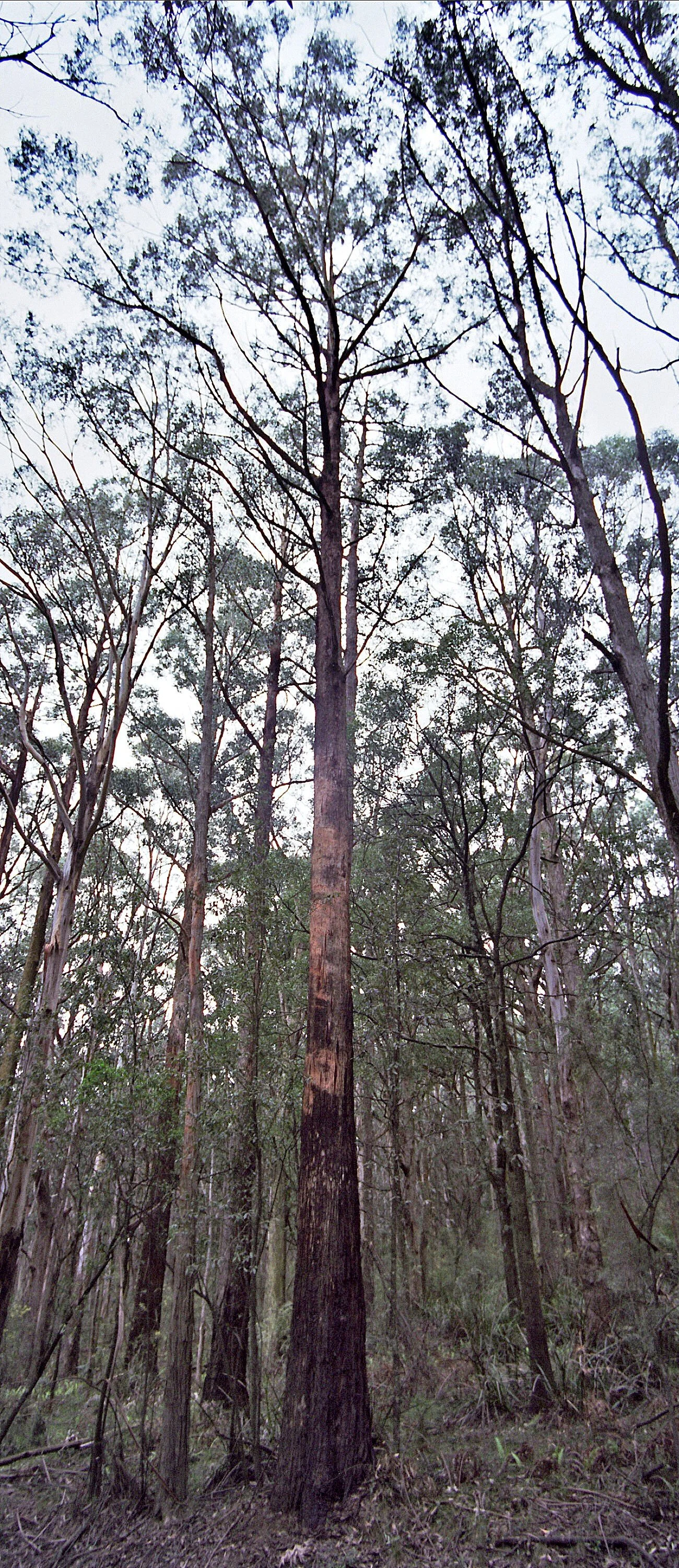
E. Sieberi in a plantation.
