Eucalyptus Dives - Broad Leafed peppermint
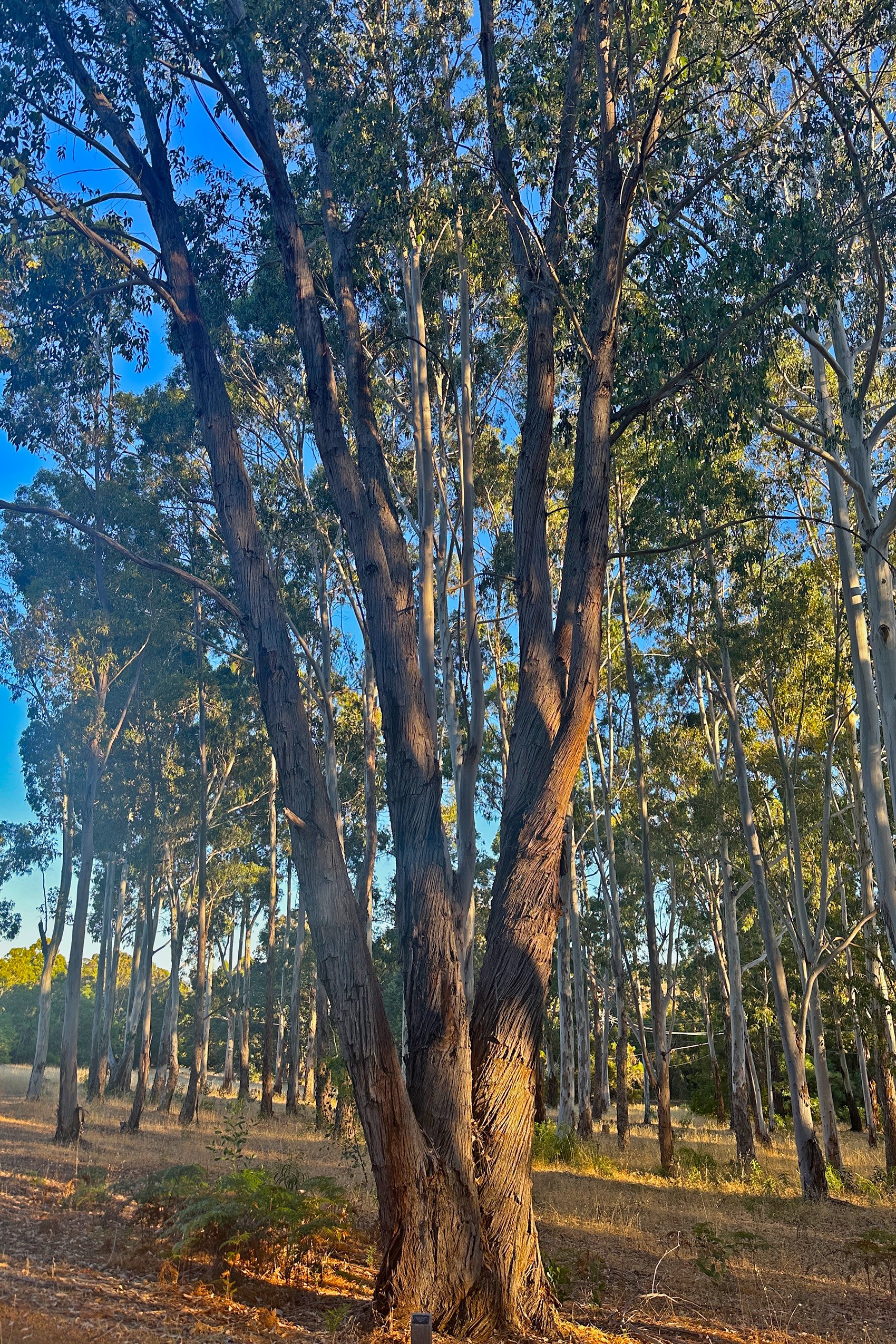
E. Dives is a tree growing to 20 m high and forms a lignotuber (click here for an explanation of what a lignotuber is). It’s bark generally rough and has a finely fibrous appearance (i.e. peppermint-type), grey to grey-brown in colour. Where it is smooth the bark is also grey.
Flowering has been recorded from May–July and September–January. The flowers are white.
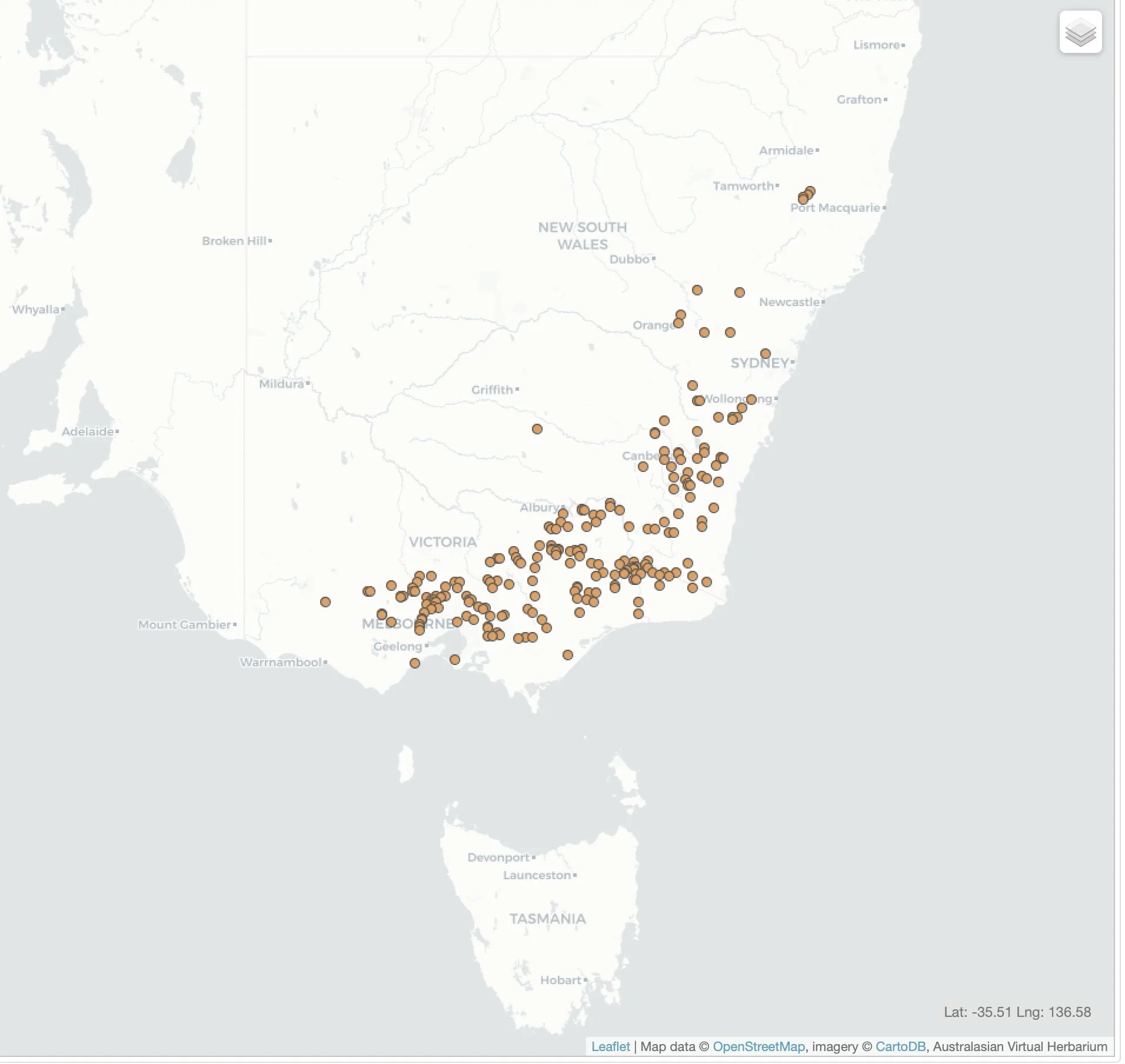
It has a wide distribution from the Northern Tablelands of New South Wales, through the Southern Tablelands to eastern Victoria – see map opposite.
It is known for producing natural oils, and its name ‘dives’ is Latin for ‘rich’, referring to the rich oil content of the leaves.
Large plantations were planted in South Africa for oil extraction, with production known from between the 1960s to 1990s. It was also harvested in NSW up to the 1970s but could not compete on price with the oils from South Africa.
The oil was used for production of l-piperitone which in turn was used for the production of synthetic l-menthol. Today it used for its flavour, fragrance and aromatherapy applications. It is also useful as a general-purpose solvent. (CSIRO).
The tree was planted in the Park in 1987.
Sources
Source: Vicflora – Flora of Victoria - https://vicflora.rbg.vic.gov.au/flora/taxon/0fb2aaa8-3e57-4b0f-9046-2f32dfb2b906
Atlas of Living Australia - https://profiles.ala.org.au/opus/foa/profile/Eucalyptus%20dives