Eucalyptus clivicola – green mallet
Eucalyptus clivicola is a mallet that typically grows to a height of 12 m.
A mallet is a small (usually less than 10m) Eucalyptus tree often found in semi arid areas, which is a similar habitat to the mallees. A mallet different from a mallee in that a mallet forms a single narrow stem or trunk whereas a mallee forms multi stems.
Unlike mallees, mallets rarely form a lignotuber. This is a woody swelling at the base of the tree below or just above the ground. It contains ‘adventitious’ buds i.e. new buds normally appear much higher in the tree but these ones are a useful adaption that allow the tree to develop new shoots if the top of the plant is breaks off or is burnt.
The bark of the green mallet is typically smooth grey over yellowish bark. The greyish bark partially but fully shed.
It flowers between December to May with flowers that are pale yellow.
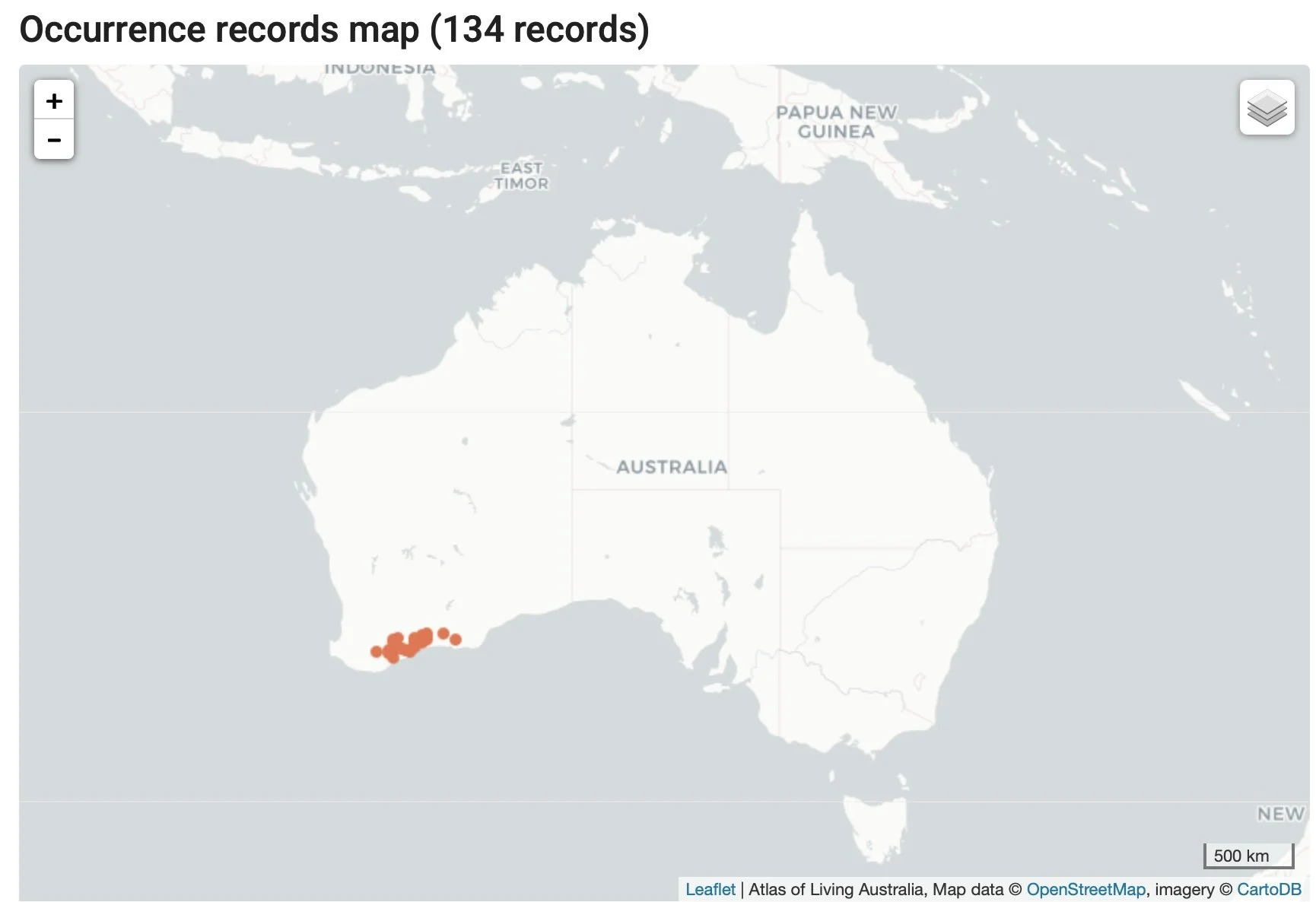
It is endemic to Western Australia, found only the southern coastal and subcoastal areas from Borden in the west to Fitzgerald River National Park and the Ravensthorpe Range (see map). It is usually found on lateritic ridges and slopes.
It was first described in 1991 by Ian Brooker and Stephen Hopper from a specimen they found on the Ravensthorpe-Hopetoun road.
The word ‘clivicola’ comes from the Latin word ‘clivus’ meaning "ascent", "elevation", "hill" or "sloping hillside" with the suffix ‘cola’ meaning "dweller" i.e. the landform it is usually found on.
The tree was planted in the Park in 2009.
Sources
EUCLID - Eucalypts of Australia Forth Edition (2020). https://apps.lucidcentral.org/euclid/text/entities/eucalyptus_clivicola.htm
Atlas of Living Australia - https://bie.ala.org.au/species/https://id.biodiversity.org.au/node/apni/2887030
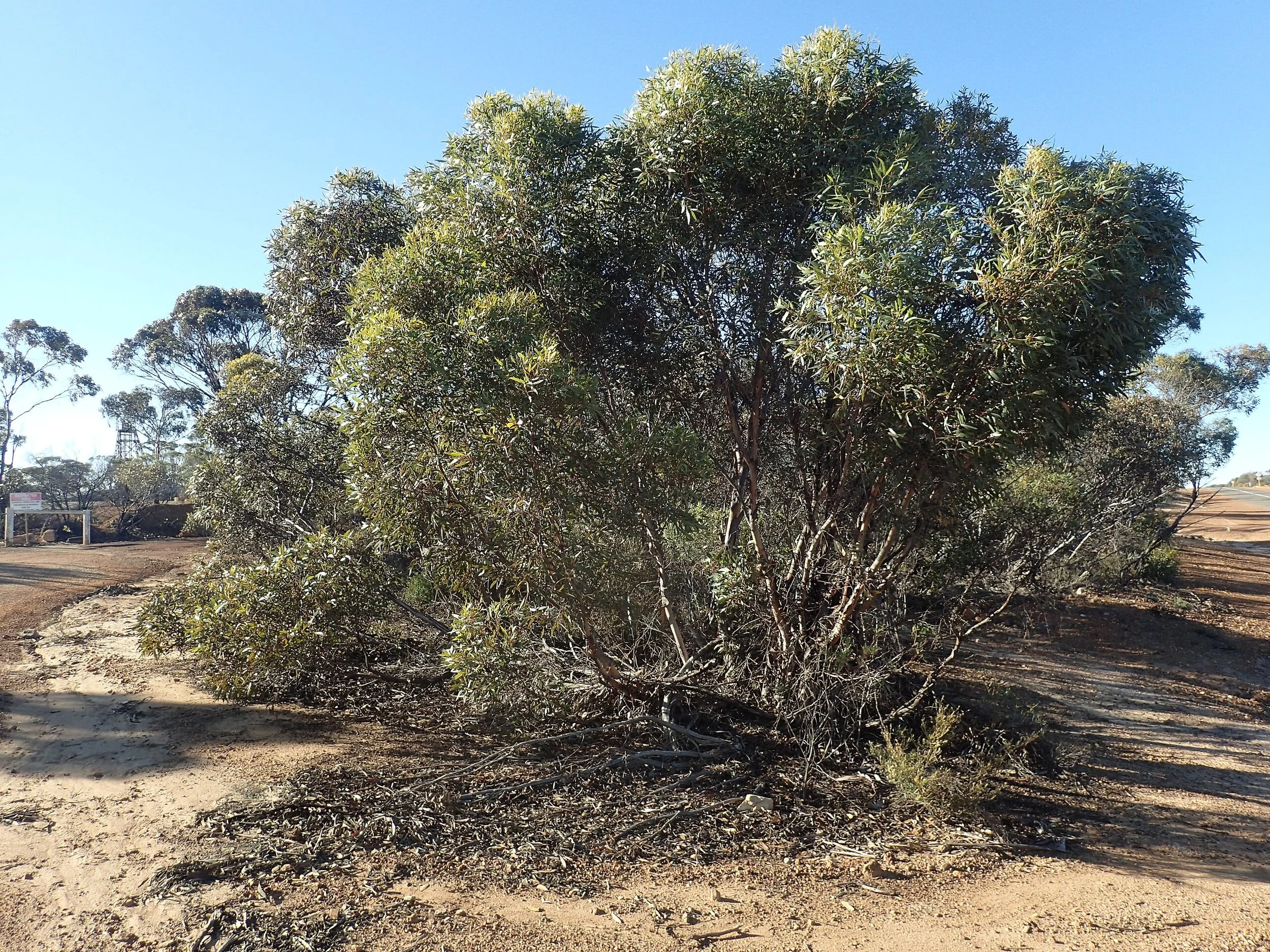

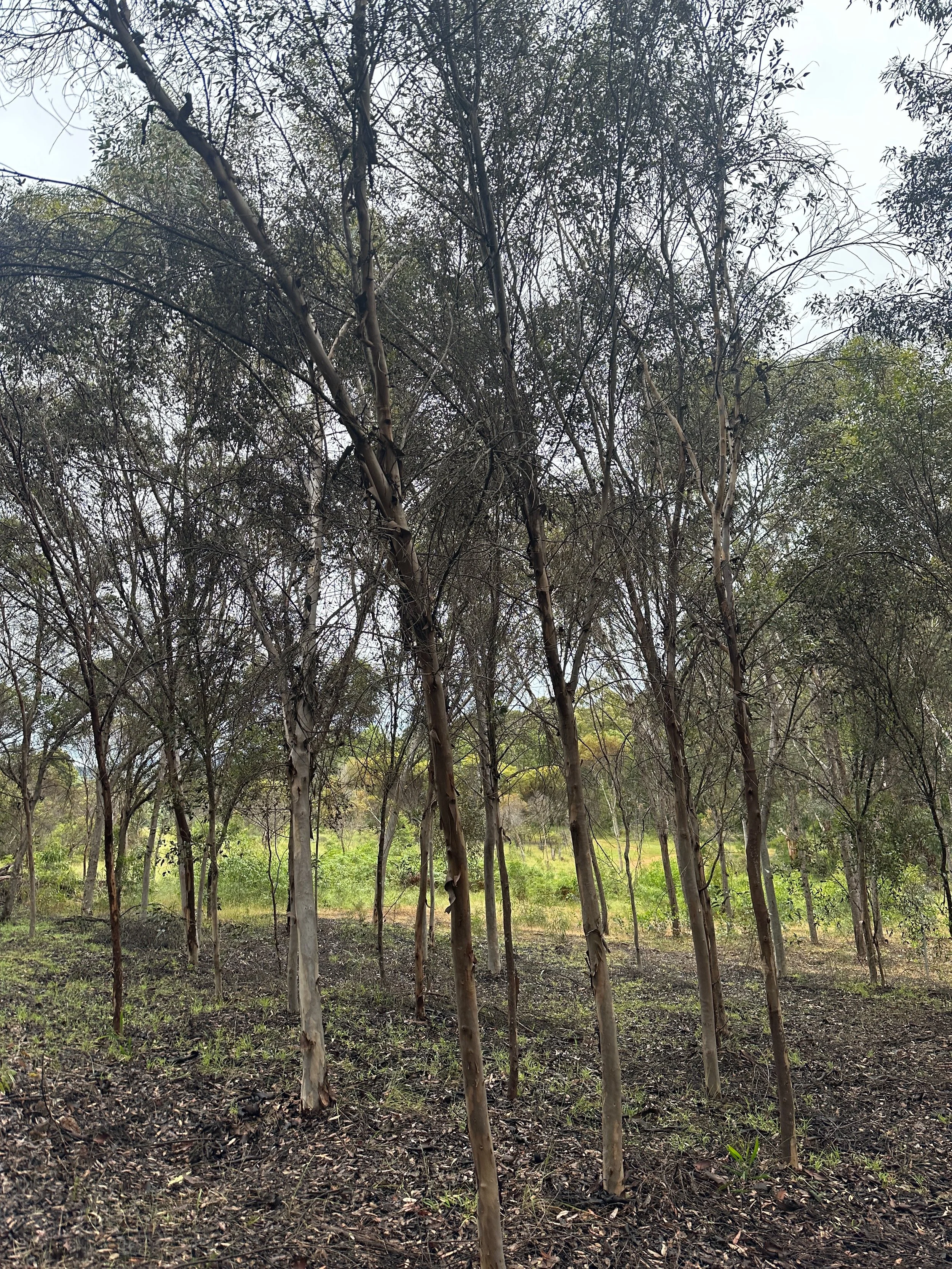
Eucalyptus clivicola in the park