Eucalyptus cinerea Argyle apple
Eucalyptus cinerea is a tree growing up to 15 m tall and usually forms a lignotuber - this is a woody swelling at the base of the tree below or just above the ground. It contains ‘adventitious’ buds i.e. new buds normally appear much higher in the tree but these ones are a useful adaption that allow the tree to develop new shoots if the top of the plant is breaks off or is burnt.
It is found naturally on the Central and Southern Tablelands and adjacent Western Slopes of New South Wales, as well as in north-eastern Victoria. It is now a common street and park tree, especially in Canberra.
It can flower from May through to November, although typically October-November. The flower are white.
Its bark is fibrous, red and stringy.
The Wiradjuri people of NSW call it gundhay.
“Argyle” refers to Argyle County in New South Wales where it is common, and ‘apple’ refers to the barks which resembles that of an apple tree.
It was planted in the Park in 1986.
Sources:
EUCLID Eucalypts of Australia Fourth Edition - https://apps.lucidcentral.org/euclid/text/entities/eucalyptus_cinerea_subsp._cinerea.htm
Atlas of Living Australia - https://bie.ala.org.au/species/https://id.biodiversity.org.au/taxon/apni/51702981
Trees of Stanford - https://trees.stanford.edu/ENCYC/EUCcin.htm
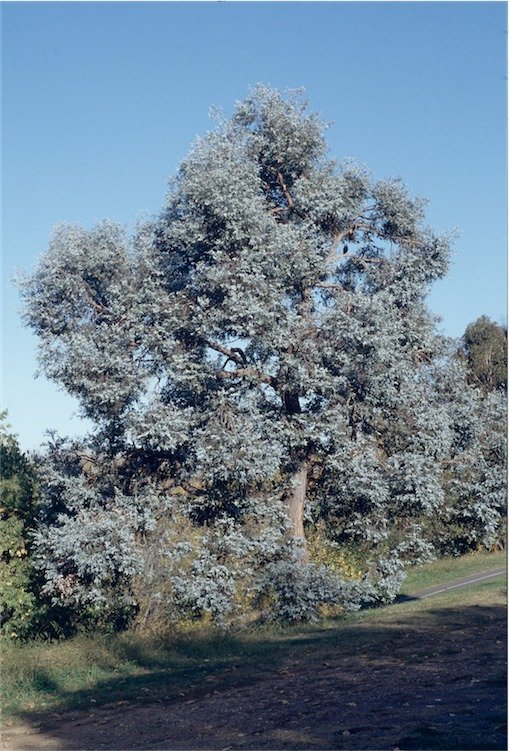
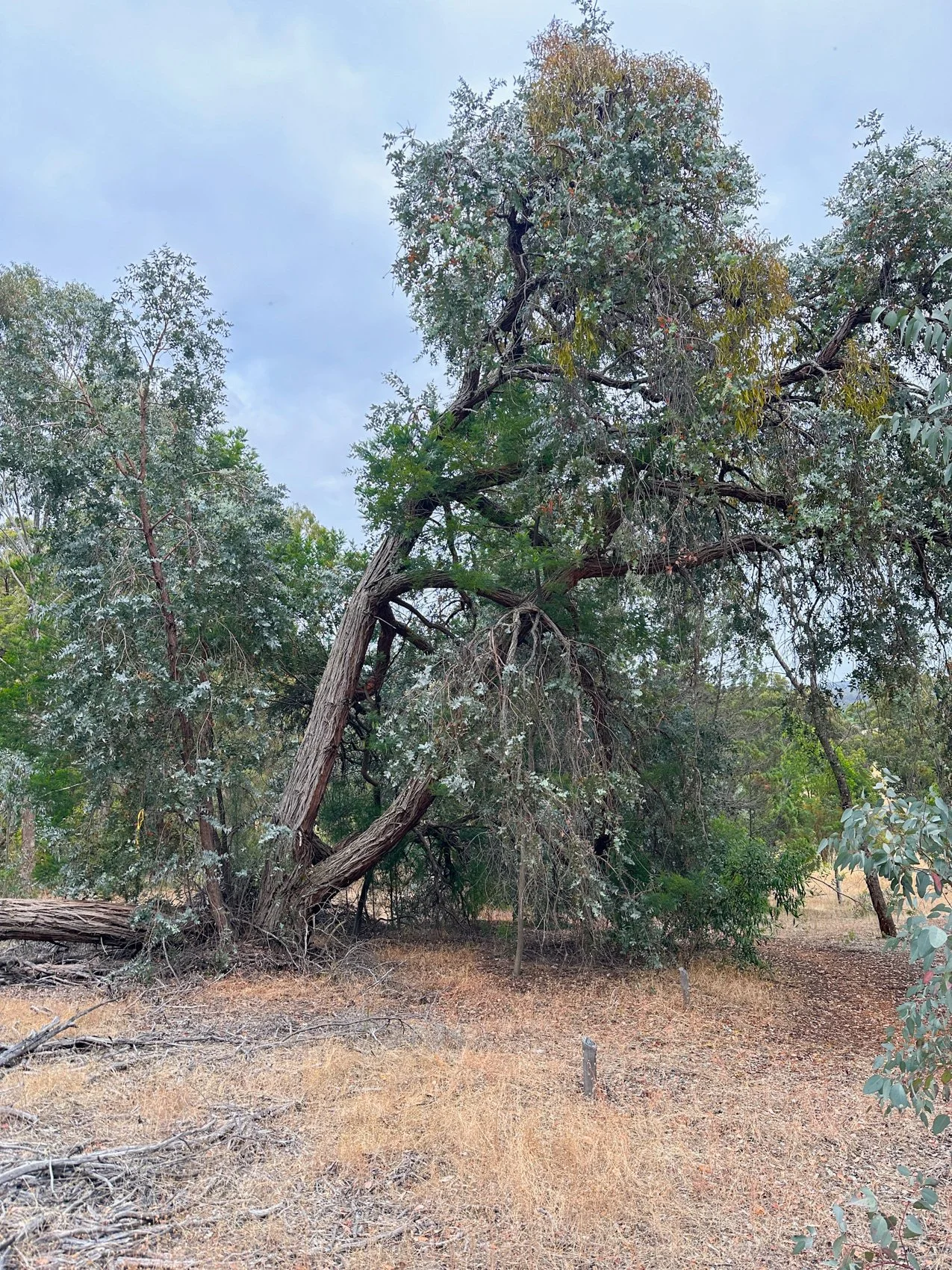
Eucalyptus cinerea in the Park