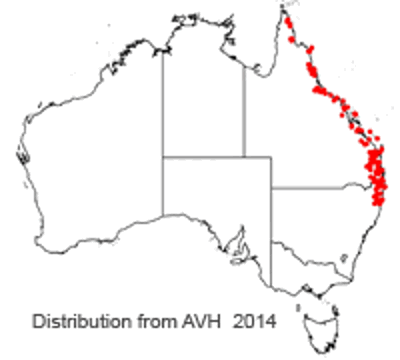
Araucaria cunninghii Hoop pine
Araucaria cunninghamii is a cone-shaped tree with a highly symmetric shape that grows up to 60 m.
It is a is a gymnosperm, which is a groups of vascular plants that has exposed seeds (or ovule). Flowering plants, or angiosperms, forms seeds that are enclosed by mature ovaries, or fruits. The word ‘gymnosperms’ literally means “naked seeds”, which are found in cones and become visible once mature. The gymnosperms familiy includes conifers.
A. cunninghamii gets its common name because the outer layer of bark forms scale-like horizontal hoops.
It prefers rainfall of over 30 inches a year (762mm) and is found naturally in rainforests along the east coast of Australia from the Macleay River in New South Wales to as far north as Cape York Peninsula and extends into PNG.
Male and female cones are usually on the same tree, with male cones forming a dense cluster of cylindrical spikes, and the female cones are round and brown and, when mature, are about 8–10 cm in diameter. They are found near the top of the tree. This makes send dispersal easier.
Female cones can form after 10-12 years whereas male cones typical form after 22 years.
The word Araucaria derives from the Arauco province in Chile, where the related species Araucaria araucana was first discovered.
It is named after the early 19th Century Australia and New Zealand botanist Allan Cunningham (1791-1839).
The tree was planted in the Park in 1990.
Sources
The Australian National Botanic Gardens - https://www.anbg.gov.au/gnp/interns-2014/araucaria-cunninghamii.html
The Gymnosperm Database - https://www.conifers.org/ar/Araucaria_cunninghamii.php
Britannica online - https://www.britannica.com/plant/gymnosperm
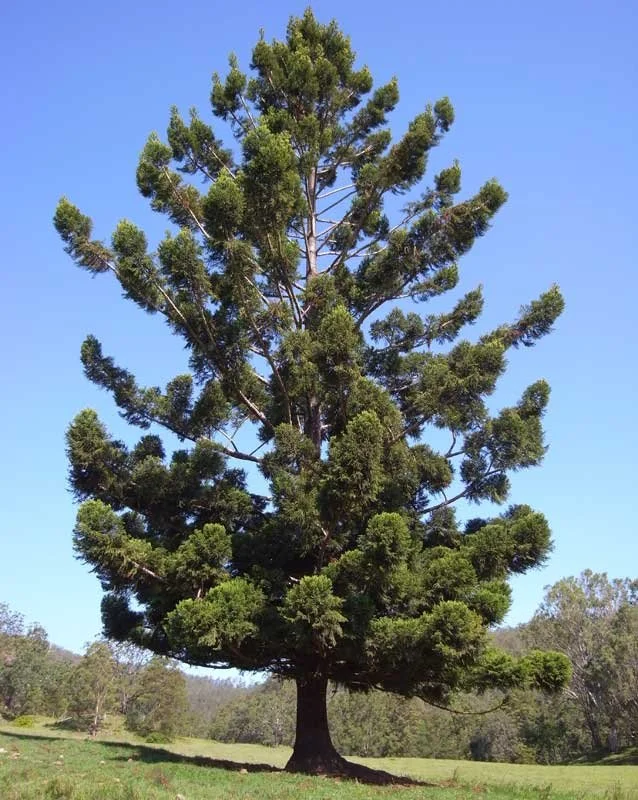
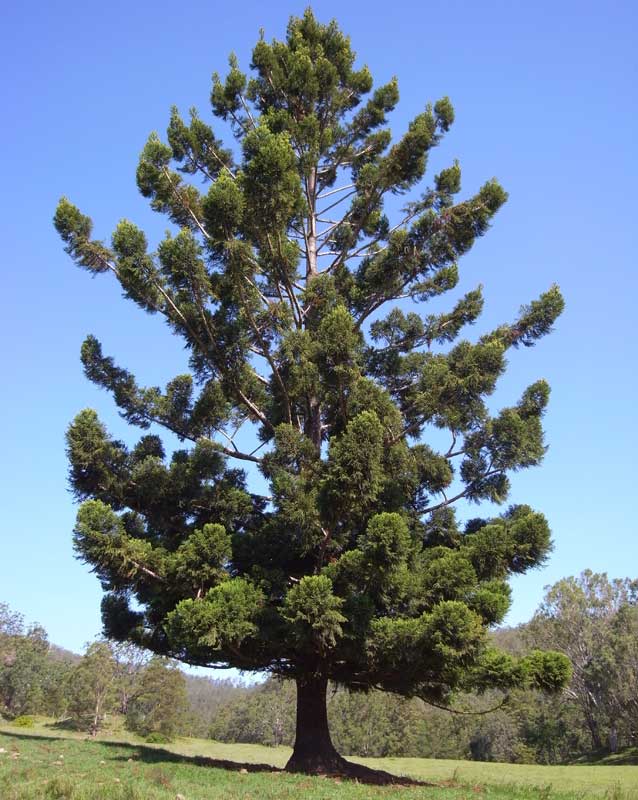
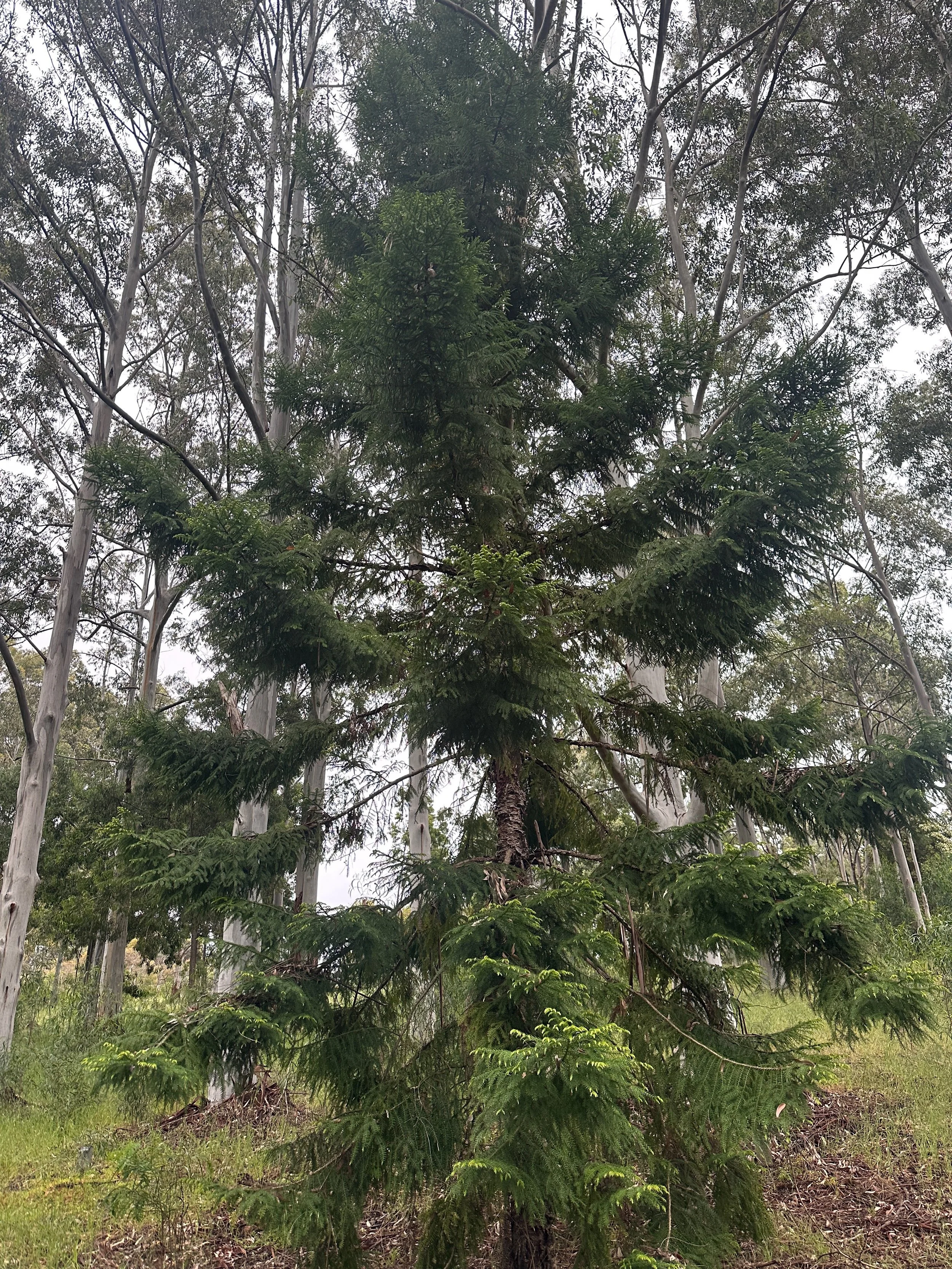
Araucaria cunninghii found in the Park